
Healthcare IT Asset Disposition: Why Secure and Accurate ITAD Protects PHI and Strengthens Compliance

Medical professional working on computer systems in a modern hosHealthcare organizations manage some of the most sensitive data in the world. Every workstation, server, imaging device, laptop, and storage array stores information that supports patient care and attracts constant attention from cybercriminals. As technology refresh cycles accelerate and device inventories grow, the retirement of those assets has become a critical part of healthcare cybersecurity and compliance.

What was once considered an operational task is now an essential control. When a device leaves a hospital, clinic, or ambulatory site, the data inside can either be fully protected or immediately exposed. A single mishandled drive containing electronic protected health information can trigger federal investigations, mandatory patient notifications, and settlements that reach into the millions.


Modern IT asset disposition plays a strategic role by protecting PHI, strengthening audit readiness, and supporting organizational goals. Securis builds its ITAD program on four principles: security, accuracy, sustainability, and speed. Together, these elements help healthcare IT leaders safeguard data while recovering value from aging equipment.

Why Healthcare ITAD Has Become a Compliance Imperative

Healthcare organizations face an expanding regulatory landscape, growing federal scrutiny, and the operational complexity of thousands of data-bearing devices. Several factors drive the increased importance of ITAD:

A Larger and More Complex Device Ecosystem

Hospitals now manage a wide range of devices that store PHI. From clinical laptops and imaging equipment to tablets used in patient care, every endpoint becomes a potential exposure point once it leaves active service.

Increasing Regulatory Expectations

Healthcare leaders must demonstrate adherence to HIPAA, HITECH, NIST 800-88, internal audit frameworks, and facility policies. Regulators presume PHI is at risk unless proven otherwise, creating pressure for strong documentation and accurate processes.

Greater Operational Volume

Large hospital systems and IDNs retire hundreds or thousands of devices during refresh cycles. Without structured ITAD workflows, assets accumulate, inventories become inaccurate, and compliance gaps appear.

The Cost of Errors

Devices that leave with data intact represent one of the most preventable causes of enforcement actions, privacy investigations, and major financial penalties.

The Risks Healthcare IT Leaders Must Address

Several risk factors appear consistently across healthcare organizations:

Federal Enforcement and the Cost of Noncompliance

The Office for Civil Rights continues to investigate breaches involving improperly retired devices. Large settlements often result from incomplete records, unverified destruction methods, or devices that cannot be located.

Expansion of Data-Bearing Endpoints

Medical technology online health global health network and touHealthcare environments rely on an expanding list of devices that store PHI, including laptops, workstations, tablets, imaging systems, storage arrays, networking hardware, and specialized devices.

Vendor Oversight and Third-Party Accountability

Health systems must work with ITAD partners that maintain strict controls, including NIST 800-88 compliance, NAID AAA certification, documented chain of custody, and fully traceable asset records.

Inventory Accuracy and Audit Reliability

Many organizations discover discrepancies between inventory records and collected devices. A single missing or unverified asset can trigger extensive investigations and potential compliance concerns.

How Securis Strengthens Healthcare Compliance

Securis helps healthcare organizations protect PHI, close audit gaps, and streamline device retirement with a structured, security-focused program.

Security That Closes the Data Exposure Gap
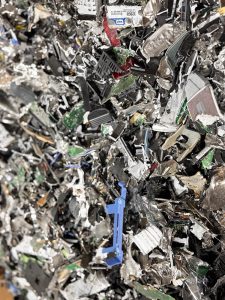
shredded-healthcare-hard-drivesSecuris builds its ITAD process on strict security controls:

  • On-site shredding of HDDs and SSDs
  • Detailed chain of custody
  • NIST 800-88 compliance
  • NAID AAA certification
  • Photo documentation
  • Audit-ready certificates of destruction

Accurate Inventory That Removes Uncertainty

Securis uses AI-powered asset tracking that scans and catalogs device labels. Reports achieve over 99 percent accuracy, eliminating guesswork and enhancing audit readiness.

Sustainable Practices That Support ESG Commitments

Securis adheres to R2v3 certified recycling standards and maintains transparent downstream processes, supporting ESG reporting and sustainability goals.

Speed That Accelerates Compliance and Reduces Risk

Securis delivers inventory reports and certificates of destruction within an average of three business days, helping healthcare teams reconcile records quickly and stay audit-ready.

Value Recovery That Supports Technology Budgets

The Proven Secure Value Recovery program offers secure resale, transparent pricing, clean logistics, and a 99.3 percent positive feedback rating across more than 120,000 items sold.

Competitive Contrast: Understanding the Difference

To help IT Leadership evaluate their current posture, compare your current vendor against the Securis standard:

FeatureGeneric Recycler / CompetitorSecurisWhy It Matters
Data Destruction StandardUnverified destruction process with no proof of complianceNIST 800-88 Compliantensures data is unrecoverable by any means.
CertificationsISO only (often just process)NAID AAA + R2v3Third-party verification of security and environmental safety.
Reporting Speed30–60 Days3 Business DaysReduces liability window; allows faster audit reconciliation.
Chain of CustodyLoose / Pallet-levelItem-level TrackingProof of location and status for every specific device.
Value RecoveryScrap metal value onlyComponent & Device RemarketingMaximizes financial return on IT investments.

Conclusion

Healthcare IT asset disposition has become a critical control for protecting patient data and supporting compliance. Securis provides a secure, accurate, sustainable, and fast ITAD program that strengthens audit readiness and reduces operational risk.

What Is Healthcare IT Asset Disposition (ITAD)?

Healthcare ITAD is the secure and documented process of retiring, sanitizing, destroying, and recycling data-bearing devices used in hospitals, clinics, and health systems. It ensures that protected health information is fully removed and that all devices are handled according to HIPAA, HITECH, and NIST 800 88 requirements.

Why Is ITAD Important for HIPAA Compliance?

HIPAA requires covered entities to protect electronic protected health information throughout the entire lifecycle of a device. If a device leaves a facility without proper sanitization or destruction, the organization is at immediate risk of a reportable data breach.

Which Healthcare Devices Require Secure ITAD?

Any device that stores or can access PHI requires secure disposition, including laptops, workstations, tablets, clinical carts, imaging systems, servers, storage arrays, networking hardware, and specialty medical equipment.

What Are the Most Common Risks During Device Retirement?

Healthcare organizations often face missing or unaccounted-for devices, unverified destruction methods, incomplete inventories, vendors that cannot prove NIST 800 88 compliance, and delayed documentation during audits.

What Is NIST 800 88 and Why Does It Matter?

NIST 800-88 is the federal standard for media sanitization. It defines purge, clear, and destroy methods to ensure data cannot be recovered. Auditors expect healthcare organizations to follow this standard.

How Does Securis Ensure Secure Data Destruction?

Securis uses strict, healthcare-focused controls, including on-site shredding, chain of custody, NIST 800 88 sanitization, NAID AAA certification, photo documentation, and audit-ready certificates of destruction.

Why Is Accurate Inventory Reporting Critical?

A single missing device can trigger a privacy investigation. Securis uses AI powered label scanning to deliver more than 99 percent accurate inventory reporting so every device is verified.

How Fast Should Healthcare ITAD Documentation Be Delivered?

Many vendors take 45 to 60 days. Securis delivers complete documentation in an average of three to 7 business days, helping teams stay audit-ready.

How Does ITAD Support ESG and Sustainability Goals?

Securis supports sustainability efforts with R2v3 certified recycling, transparent downstream processing, environmental reporting, and responsible material recovery.

Can Healthcare Organizations Recover Value from Retired Equipment?

Yes. Securis offers Proven Secure Value Recovery with secure resale, transparent pricing, fast returns, and more than 120,000 items sold with a 99.3 percent positive feedback rating.

How Do I Know If My Current Vendor Meets Compliance Standards?

Evaluate vendors by their adherence to NIST 800 88, NAID AAA and R2v3 certifications, item level tracking, reporting speed, and ability to verify every asset processed.


Government IT Asset Disposition (ITAD) Requirements & Compliance Guide

Why Secure IT Asset Destruction Is Mission-Critical for Federal, State, and Local Agencies

What Is Government IT Asset Disposition (ITAD)?

Government IT Asset Disposition is the secure and compliant process of decommissioning, destroying, or recycling IT equipment used by federal, state, or local agencies and contractors. It must meet strict regulations like NIST 800-88, NISPOM, ITAR, DFARS, and environmental laws to protect sensitive data, maintain national security, and prevent regulatory violations.

If you are a CISO, CIO, or IT Asset Manager, understanding federal requirements for IT asset disposal is essential to protecting sensitive data, avoiding regulatory violations, and ensuring mission readiness.

Why Government ITAD Is Different

Unlike private-sector companies, government organizations face additional layers of compliance for data protection, environmental stewardship, and national security. These requirements extend to defense contractors and vendors handling Controlled Unclassified Information (CUI) or classified materials.

Government IT teams manage large fleets of devices—laptops, servers, encrypted drives, legacy systems, and mobile phones. The larger and more complex the environment, the greater the risk of sensitive data slipping through the cracks during decommissioning.

Federal IT Asset Disposition Compliance Requirements for Government Agencies

If your government IT asset disposal process handles state or federal data, these regulations and certifications may apply.

NIST 800-88 Rev. 1: The Gold Standard for Data Sanitization

The National Institute of Standards and Technology (NIST) Special Publication 800-88 Rev. 1 defines acceptable methods for erasing or destroying data. It is the federal benchmark for secure data destruction. It provides:

  • Guidance for data clearing, purging, and physical destruction
  • Used to prove compliance with other federal rules like NIPSOM 32 CFR
  • Applies to hard drives, SSDs, flash media, and other storage devices

Any government ITAD vendor must follow NIST 800-88 guidelines—no exceptions.

For a full explanation of NIST 800-88 and how it applies to data destruction, read our article on the topic. 

NISPOM 32 CFR Part 117: National Security Information

The National Industrial Security Program Operating Manual (NISPOM) governs how classified and CUI must be stored, transmitted, and destroyed.

  • Applies to defense contractors and organizations working with national security data
  • Specifies procedures for secure handling and destruction
  • Replaced DoD 5220.22-M while maintaining stringent disposal standards

If your agency handles CUI or participates in a classified contract, your ITAD process must meet these rules to maintain eligibility and compliance.

ITAR & DFARS Compliance: Protecting Military and Export-Controlled Technologies

Defense contractors face additional disposal rules under the International Traffic in Arms Regulations (ITAR) and Defense Federal Acquisition Regulation Supplement (DFARS). These safeguard military technologies and export-controlled information.

When disposing of IT assets containing sensitive technical data, contractors must ensure:

  • No risk of exposure for ITAR-controlled or DFARS-covered data
  • Use of secure destruction methods meeting NIST, NSA/CSS, and DoD requirements
  • Full documentation proving compliant handling and destruction

Failure to follow ITAR or DFARS requirements can result in loss of contracts, substantial fines, and criminal penalties.

NSA/CSS Specifications for High Security

For top-secret data, the National Security Agency (NSA) and Central Security Service (CSS) maintain an Evaluated Products List (EPL) of approved degaussing and disintegration devices.

  • Required for certain classifications of hard drive destruction
  • Ensures destroyed media is irrecoverable
  • Prevents unauthorized data recovery and compliance breaches

Department of Transportation (DOT) Certification

The DOT regulates the transport of hazardous materials, including certain components in electronics such as lithium-ion batteries, mercury, and lead.

  • An ITAD vendor transporting e-waste must be DOT-certified
  • Proper labeling, packaging, and documentation are required
  • Reduces risk of spills, accidents, and legal noncompliance during transport

This is especially important for agencies handling ITAD at remote or secure facilities that require off-site disposal.

DLIS Certification: Handling Military Critical Technical Data

The Defense Logistics Information Service (DLIS) certification confirms that a vendor is authorized to store and transport Military Critical Technical Data (MCTD).

  • Required for ITAD providers working with DoD contractors and military bases
  • Ensures secure chain-of-custody for defense-related assets

ISO Certifications: Building Trust Through Quality, Safety, and Sustainability

ISO 9001:2015 – Quality Management Systems

  • Ensures consistent, reliable, and auditable processes for ITAD services
  • Demonstrates a commitment to continuous improvement and client satisfaction
  • Reinforces trust with government clients by reducing operational risk

ISO 14001:2015 – Environmental Management Systems

  • Helps organizations meet federal and state e-waste laws
  • Reduces environmental impact through responsible recycling practices
  • Supports sustainability mandates in government contracts

ISO 45001:2018 – Occupational Health & Safety

  • Prioritizes worker safety in ITAD operations (on-site and off-site)
  • Minimizes the risk of workplace incidents, aligning with federal safety protocols
  • Strengthens an agency’s due diligence when evaluating vendors

NAID AAA Certification: Critical for Government ITAD Vendors

The National Association for Information Destruction (NAID) AAA certification is the highest industry standard for secure data destruction. For government agencies, it verifies that your vendor:

  • Passes rigorous, unannounced audits of security procedures
  • Employs vetted staff with background checks
  • Maintains strict chain-of-custody controls
  • Meets or exceeds NIST 800-88 and other federal destruction requirements

Choosing a NAID AAA certified ITAD provider ensures that sensitive government, defense, or citizen data is fully protected from the moment it’s collected until it’s permanently destroyed.

Why a GSA Contract Vendor Makes Procurement Easier

Selecting an ITAD vendor with a General Services Administration (GSA) contract can significantly streamline the procurement process for government agencies.

  • Pre-vetted by the federal government for quality, security, and fair pricing
  • Eliminates lengthy competitive bidding for covered services
  • Ensures compliance with the Federal Acquisition Regulation (FAR)
  • Provides predictable, negotiated pricing for consistent budgeting
  • Reduces administrative overhead for procurement teams

Working with a GSA-approved ITAD provider not only saves time and resources but also ensures that your vendor already meets the federal standards necessary to protect sensitive data and handle government IT assets responsibly.

Environmental Responsibility in Government ITAD

Government agencies must follow strict environmental regulations for e-waste. Partnering with an R2v3-certified recycler ensures:

  • Compliance with federal and state environmental laws
  • Responsible downstream management of all materials
  • Protection against fines, legal risk, and reputational damage

The R2v3 standard is globally recognized for its emphasis on environmental protection, data security, and responsible downstream management. Learn more about this certification in our blog. 

Why Documentation Is Everything in an Audit

When an audit hits, it’s not enough to say your data was destroyed — you need proof.

Government ITAD compliance depends on:

  • Detailed Certificates of Destruction
  • Complete chain-of-custody logs
  • Asset-level serial number reporting
  • Ongoing 24/7 access to records in case of legal inquiries or Freedom of Information Act (FOIA) requests

Without proper documentation, your agency or department is exposed, even if you believe your vendor followed protocol. Look for a company that will allow you to access your documentation 24/7via a client portal so you will always be audit-ready.

Common Risk Scenarios in Government ITAD

Risk ScenarioDescriptionPotential Impact
Unsecured Data DisposalData-bearing devices are disposed of without NIST 800-88 compliant destruction.Sensitive data breach, regulatory fines, national security risk.
Improper Chain-of-CustodyLack of documentation or serial tracking throughout transport and destruction.Audit failure, compliance violations, lost or stolen assets.
Vendor Non-ComplianceITAD vendor lacks NAID AAA, R2v3, DLIS, or DOT certifications.Contract loss, fines, legal liability for mishandled assets.
Environmental Non-ComplianceE-waste not recycled according to federal/state regulations or R2v3 standards.Fines, reputational damage, hazardous material incidents.
Unapproved Methods for Classified AssetsDestruction methods not on NSA/CSS Evaluated Products List.Irrecoverable classified data, loss of eligibility for contracts.
Failure to Meet Export Control RegulationsITAR or DFARS-covered technical data exposed during disposal.Criminal penalties, contract termination, national security violations.

How Securis Supports Government ITAD Compliance

Securis proudly partners with federal, state, and local government agencies and contractors to deliver secure, accurate, and fully compliant IT asset disposition (ITAD) services. With over 25 years of experience, a 5-star Gartner rating, and a trusted track record across multiple levels of government, Securis is the proven choice for public sector ITAD.

Securis helps government agencies and contractors reduce risk and meet their compliance goals with:

  • R2v3 certification for responsible recycling
  • NAID AAA certification for secure data destruction
  • NSA-approved shredders and degaussers
  • DLIS and DOT certification for secure transport
  • Full compliance with NIST 800-88 Rev. 2 and NISPOM standards
  • ISO 9001:2015, 14001:2015, and 45001:2018 certifications
  • On-site and off-site data destruction with serialized reporting
  • 24/7 access to documentation for audits and legal reviews
  • GSA Contract in place for streamlined government procurement

Government IT asset disposition isn’t just about getting rid of old equipment—it’s a high-stakes, highly regulated process. Partnering with a GSA-approved, NAID AAA certified, R2v3 compliant ITAD provider like Securis ensures you meet all regulatory requirements, protect sensitive information, and maintain operational readiness.

📅 Schedule your Government ITAD Compliance Consultation

Learn more about Securis Government Services »

The Ultimate Guide to IT Asset Disposition (ITAD) Certifications and Compliance

Why ITAD Compliance Is Non-Negotiable

When it’s time to retire your organization’s IT equipment—servers, laptops, mobile devices, data center hardware—compliance with IT asset disposition (ITAD) standards is critical. Improper disposal of data-bearing assets can lead to data breaches, legal penalties, regulatory fines, and damage to your reputation.

This guide helps you:

  • Understand what ITAD compliance really means
  • Identify the certifications that matter (and why)
  • Learn about the standards and laws that apply across industries
  • Evaluate ITAD vendors for compliance, audit readiness, and risk reduction

What Is ITAD Compliance?

ITAD compliance is the secure, documented, and legally compliant process of disposing of data-bearing IT assets. It ensures data privacy, environmental responsibility, and full audit traceability. ITAD compliance typically includes:

  • Following industry-specific data privacy laws like HIPAA, GLBA, FERPA, and others
  • Aligning with data sanitization standards such as NIST 800-88
  • Using vendors with third-party certifications (e.g., R2v3, NAID AAA, ISO 9001)
  • Maintaining ITAD chain-of-custody documentation and Certificates of Destruction

💡 Compliance Insight: The Importance of Chain-of-Custody: Without chain-of-custody documentation, your organization may be unable to prove compliance, even if the data was destroyed. Always require asset-level tracking and Certificates of Destruction.

Compliance Is a Shared Responsibility

Even with a certified ITAD provider, your organization remains accountable. Auditors may ask for documentation showing how and when data was destroyed. Ensure your vendor offers:

  • 24/7 access to audit logs and certificates
  • Clear, documented policies for data destruction, transport, and asset tracking

💡 Compliance Insight: Fines can follow improper disposal; regulatory penalties don’t stop with a vendor’s mistake. If your organization can’t produce audit-ready documentation, liability falls on you, even if the vendor failed.

Key ITAD Certifications and What They Prove

Working with a certified ITAD vendor helps your organization prove compliance with major data security and environmental regulations. Certifications also provide external validation that your vendor is following documented, repeatable processes, minimizing your company’s risk.  These certifications are third-party accreditations awarded to vendors that meet specific operational, environmental, and security criteria for handling and disposing of IT assets.

R2v3 (Responsible Recycling)

R2v3 CertificationThe R2v3 Standard, developed by Sustainable Electronics Recycling International (SERI), is the most widely adopted certification for electronics reuse and recycling. R2v3-certified vendors must demonstrate excellence in:

  • Downstream vendor due diligence – Ensures all recycling partners follow environmental and data security standards
  • Data sanitization and destruction – Includes strict protocols for wiping, degaussing, or shredding data-bearing devices
  • Testing and repair – Verifies that reusable devices are functionally tested and tracked
  • Specialty electronics – Covers complex equipment like medical devices and telecom hardware
  • On-site and off-site destruction – Requires documented processes for both in-facility and on-premises data destruction
  • Responsible brokering – Ensures any resale or reuse is compliant with all applicable regulations


R2v3 also requires transparency through clearly defined service scopes and annual audits, making it one of the most rigorous ITAD certifications.

Read our blog to learn more about why you should work with an R2v3-certified facility.

💡 Compliance Insight: Data Destruction Supports ESG Goals: ITAD compliance isn’t just about security—it also supports ESG reporting. R2v3 and ISO 14001-certified vendors contribute to environmental sustainability and governance transparency.


NAID AAA Certification

National Association of Information Destruction (NAID) and AAA CertificationIssued by i-SIGMA, NAID AAA Certification is the global benchmark for verified data destruction. Unlike vendors who merely “claim” compliance with NIST or HIPAA, NAID AAA-certified providers are:
  • Independently audited (often unannounced)
  • Required to follow strict protocols for hard drive shredding, data wiping, and physical security
  • Held to chain-of-custody standards with detailed logs for asset handling and transport
  • Subject to employee screening, secure access controls, and certified destruction equipment
  • Required to provide Certificates of Destruction to prove evidence of a compliant and secure data destruction service
  • This certification is particularly valuable for regulated industries like healthcare, finance, and government, where audit readiness and legal liability are high stakes.

Learn more about why NAID matters here.

ISO Certifications (Quality, Environmental, and Safety)

ISO standards add important layers of accountability to a certified ITAD company’s operations:

ISO 9001:2015 – Quality Management

Proves the vendor has repeatable, auditable processes in place for IT asset handling, customer service, and documentation—minimizing risk and maximizing reliability.

ISO 14001:2015 – Environmental Management

ISO 14001: 2015Ensures that e-waste is managed responsibly, hazardous materials are handled properly, and recycling practices align with environmental laws and sustainability goals.
ISO 45001:2018 – Occupational Health & Safety

ISO 45001:2018Demonstrates the provider protects its workforce through training, hazard controls, and safety programs, reducing the risk of disruption due to accidents or unsafe practices.
Government Certifications

DLIS (Defense Logistics Information Service Certification)

Seal of the Defense Logistics AgencyCertifies that an ITAD provider is authorized to handle Military Critical Technical Data (MCTD) and meets Department of Defense (DoD) standards for secure data storage, access control, and personnel vetting.

For government agencies and defense contractors, working with a DLIS-certified ITAD provider ensures that classified or controlled unclassified information (CUI) is protected throughout the asset disposition process, eliminating the risk of unauthorized access, data leaks, or regulatory violations.


Department of Transportation

Department of TransportationFor transporting devices that contain hazardous materials (e.g., batteries, mercury), DOT certification confirms the provider uses trained drivers, proper packaging, labeling, and safety documentation. For clients, this certification provides confidence that retired IT assets are being moved safely, legally, and in compliance with environmental and safety laws, protecting their organization and the public.

ITAD Standards vs. Certifications: What’s the Difference?

  • Standards (e.g., NIST 800-88) define how processes should be performed
  • Certifications (e.g., NAID AAA, R2v3, ISO) are third-party validations that those processes are followed

Example: A vendor can say they “follow NIST 800-88,” but only NAID AAA Certification proves that it has been verified through an audit.

💡 Compliance Insight:  Standards vs. Certifications: Standards like NIST 800-88 define how data should be destroyed. Certifications like NAID AAA or R2v3 prove your vendor actually follows those standards through third-party audits.

Common ITAD Standards

NIST 800-88

The gold standard for data erasure and physical destruction. Defines “Clear,” “Purge,” and “Destroy” methods. Required or recommended under HIPAA, GLBA, and DoD regulations.

For more on the importance of NIST 800-88 and how it fits into a broader compliance strategy, visit our blog: NIST 800-88: Secure Data Destruction Standards for Media Sanitization

💡 Compliance Insight: Not All “Compliant Vendors” Are Audited: Many ITAD providers claim NIST 800-88 “compliance” without any certification. NAID AAA and R2v3 are the only widely recognized credentials that require regular audits.

NSA/CSS Policy Manual 9-12:

Outlines the NSA’s approved methods for the physical destruction of classified data on electronic media. Often used in government and military environments.

NISPOM 32 CFR Part 117

The National Industrial Security Program (NISP) Operating Manual 32 CRF Part 117  (which replaced DOD 5220.22-M defines how contractors must protect classified and controlled unclassified information (CUI). Replaced DoD 5220.22-M.

IEEE 2883-2022

A modern alternative to NIST 800-88, it provides updated guidance for emerging storage media (like NVMe drives) and supports circular economy goals like reuse and sustainability.

💡 Compliance Insight: NIST 800-88 is not a certification—it’s a standard. Only third-party audits like NAID AAA can confirm it’s being followed correctly.

Data privacy regulations

When you retire data-bearing devices—laptops, servers, mobile phones, storage arrays—you’re not just discarding hardware. You’re responsible for the sensitive information those devices hold, even after they leave your facility. Across industries, data privacy regulations mandate secure, auditable disposal of IT assets to protect consumers, employees, patients, students, and national interests.

Below is a breakdown of the most essential regulations by industry and how your ITAD program should address them.

Healthcare

Healthcare organizations are governed by some of the most stringent data protection laws, requiring documented destruction of ePHI and other sensitive information.

  • HIPAA (Health Insurance Portability and Accountability Act): Requires covered entities to implement policies for secure data removal and the final disposition of hardware that contains electronic protected health information (ePHI). See 45 CFR §164.310(d).Learn More about HIPPA in our HIPPA FAQ section.
  • HITECH Act: Expands HIPAA requirements, with specific mandates for data breach notification and secure erasure of ePHI. Retired assets must be rendered unreadable, and the process must be documented. Learn more about HITECH in our blog about HITECH Compliance.
  • FDA 21 CFR Part 11: Applies to healthcare, biotech, and life sciences organizations using electronic records and signatures. Requires validated systems and proper disposal to prevent unauthorized data access

💡 Compliance insight: Your ITAD vendor should offer auditable chain-of-custody tracking, verified data destruction, and certificates for every asset processed to help maintain HIPAA and HITECH compliance.

Finance & Banking:

Financial institutions—including banks, credit unions, fintech companies, and investment firms—must protect consumer financial information at every stage, including during IT asset disposal. Learn more about these regulations below, or read about how Securis helps financial institutions in our blog.

Sarbanes-Oxley Act of 2002

  • Gramm-Leach-Bliley Act (GLBA): Requires financial institutions to safeguard customer data during disposal. Violations can result in steep penalties and reputational harm. Learn more about GLBA in our blog. 
  • Sarbanes-Oxley Act (SOX): Public companies must maintain records and protect sensitive financial information—improper ITAD processes could lead to non-compliance or audit failure. Learn More about SOX in our blog.
  • Bank Secrecy Act (BSA): While not ITAD-specific, it mandates protection of customer and transaction data throughout its lifecycle, including disposal.
  • Patriot Act: Enforces secure retention and destruction of sensitive financial records that could be tied to anti-money laundering or counter-terrorism compliance.
  • FIEC Guidance: The Federal Financial Institutions Examination Council (FFIEC) outlines controls for data destruction to prevent unauthorized access and ensure compliance with financial regulatory frameworks.

💡 Compliance insight: A financial-grade ITAD program must include certified data destruction, complete inventory logs, secure logistics, and reliable documentation, reducing legal exposure and supporting compliance during audits.

Federal & Government Agencies and Contractors:

Government entities and contractors working with classified or sensitive data must meet stringent data destruction protocols and facility requirements.

  • NISPOM 32 CFR Part 117: Establishes handling standards for classified and Controlled Unclassified Information (CUI), replacing the legacy DoD 5220.22-M. Requires secure disposal and traceability.
  • NSA/CSS Policy Manual 9-12: Dictates how classified information stored on electronic media must be destroyed. Only NSA-evaluated equipment meets the criteria.
  • ITAR & DFARS Compliance: Applies to defense contractors—equipment disposal must not risk exposure of military or export-controlled technologies.

💡 Compliance Insight: NSA-Approved Equipment Isn’t Optional for Classified Data: Government agencies and contractors must use degaussers and disintegrators listed on the NSA/CSS EPL to destroy classified media.

Education:

Educational institutions store large volumes of student data subject to federal privacy laws.

  • FERPA (Family Educational Rights and Privacy Act): Mandates strict confidentiality of student education records and personally identifiable information (PII), including during asset disposal.
  • CIPA (Children’s Internet Protection Act): Applies when disposing of student devices that may store sensitive browsing history or access logs.

💡 Compliance Insight: Schools and universities must securely destroy student records on end-of-life devices. Failure to do so can jeopardize funding and student privacy.

Cross-Industry Regulations & Standards

These apply to a broad range of organizations that collect, store, or process consumer data.

  • FACTA Disposal Rule: This rule requires secure disposal of consumer information from credit reports and mandates physical or digital destruction methods that prevent reconstruction.
  • PCI DSS (Payment Card Industry Data Security Standard): Requires the complete removal of payment card data from any storage device at end-of-life.
  • OSHA (Occupational Safety and Health Administration): Not a data privacy law, but relevant to ITAD operations. It ensures workers handling e-waste and shredding equipment do so in safe, regulated environments.
  • Basel Action Network (BAN): Supports ethical global e-waste practices—important if your company has ESG commitments or operates internationally.

Final Thoughts: Why ITAD Compliance Matters More Than Ever

ITAD isn’t just about getting rid of old equipment. It’s a compliance-driven process with major implications for your organization’s data privacy, security, and ESG goals. Every regulation named above expects one thing: that your organization has full control over data throughout the IT asset lifecycle, including disposal. To stay compliant, you need to find an ITAD vendor that offers:

  • Certified processes and independently audited facilities
  • Comprehensive, item-level tracking and secure chain of custody
  • Proof of data sanitization aligned to standards like NIST 800-88, and IEEE 2883
  • Real-time access to destruction documentation and Certificates of Destruction

Anything less exposes your organization to regulatory violations, data breaches, and reputational harm.

💡 Compliance Insight: Document Everything—Even If It’s outsourced, using a third-party ITAD provider doesn’t absolve you of responsibility. Regulators expect documented proof of every step, from pickup to final destruction.


📥 Download: ITAD Compliance Checklist

Want a quick-reference guide for internal use or vendor evaluations?
👉 Download the ITAD Compliance Checklist “Secure, Compliant, and Audit-Ready ITAD: A Checklist