60 Minutes Video on an Electronics Landfill in Guiyu

This 60 Minutes Video on an Electronics Landfill in Guiyu illustrates how the town has become a dumping place for very toxic e-waste. In Guiyu, they burn the waste to extract the bit of copper from discarded electronics. Once burned, the plastic releases bromine which creates dioxin – an extremely toxic, cancer-causing agent.

Each year, hundreds of millions of laptops, mobile phones, hard drives, and other electronics are discarded by corporations, government institutions, and consumers.  A mere 18% of these are likely to be properly disposed of, which means that an alarming amount of them end up in electronics landfills like the one in Guiyu.

This is just one of the reasons that Securis is R2 certified. The electronics that we handle are stripped of sensitive data and then processed in an environmentally friendly manner.

Being R2 Certified Means:

  • We’ve undergone a rigorous audit by an independent third party who evaluates more than 50 areas of performance
  • We’re held accountable to effectively, securely destroy all data on our clients’ best cloud storage devices
  • We do not export equipment or its components
  • We send materials only to licensed and permitted R2 facilities

What it boils down to is Securis’ R2 certification ensures that our clients’ equipment doesn’t end up in an electronics landfill like the one in Guiyu featured in the 60 Minutes video.  And that’s good for all of us.
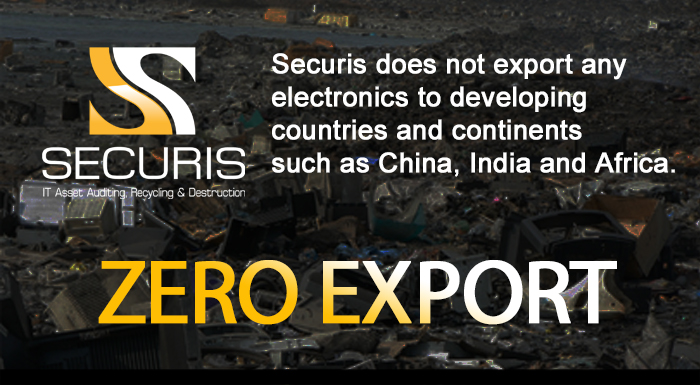
Zero Export

Data Destruction Franchise Owner Featured on CBS Local

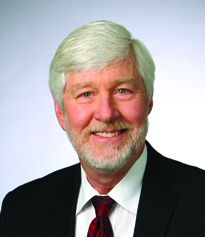
Hugh McLaurin WebCentral Maryland Securis franchise owner Hugh McLaurin has been featured on CBS Local. McLaurin shares advice for others looking to enter the data destruction field, his daily duties, and the responsibilities of his role:

“My primary role is to educate decision-makers in companies and institutions about the need for the services we offer and establish relationships that will hopefully lead to partnerships down the road. But I also get my hands dirty with picking up and processing customers’ equipment, destroying data stored on hard drives and other media, running the financial aspects of the company and writing proposals for new customers and contracts.”

Click here to read the full article. 

Securis and 6th graders – What’s the Deal?

Securis and 6th graders – What’s the deal?  A group of enthusiastic 6th graders recently visited the Chantilly VA location of Securis operations, after signing some serious paperwork, to learn more about e-waste management. This group of five students, participating in the First Lego League Robotics competition, was on task to learn more about e-waste, and how it’s handled and disposed of.

They were given quite the VIP treatment complete with safety glasses and gloves and put straight to work dismantling some old computers previously stripped of all data components. Needless to say, while learning quite a bit about their research topic, these kids earned bragging rights at school!

Students: Anoushka Upadhye, Neha Regi, Rohan Regi, Sean Gillen, and Kylie Gillen

Anoushka Upadhye, Neha Regi and Kylie Gillen


Rohan Regi and Sean Gillen


Rohan Regi and Sean Gillen


Anoushka Upadhye, Neha Regi and Kylie Gillen

Why Recycle Electronics?

A large part of the Securis mission is our commitment to proper IT recycling and ensuring that our customer’s retired electronics (and our own) never end up in a landfill. Recently, an IT professional who works at a fairly large healthcare facility asked us why we bother taking the time to break apart old computers and make sure that all parts and scrap are re-purposed or recycled. “After all,” he said, “it’d be much less expensive and quicker to just shred the hard drive and dump the rest.”

While he has a point, we feel strongly about our green initiatives and hold our R2 certification for this very reason – R2 means that nothing ends up in places like Agbobloshie, the world’s largest e-waste dump.

Today, The Washington Post ran an article about the children who make a living in the toxic world of discarded electronics. Chilling photos by photographer Valentino Bellini show pollution, huge piles of electronic waste, and black, smoke-filled air from burning e-waste.

Photo credit

Bellini believes that his powerful photos will help to change something in the life of the subjects he portrays. We hope so as well.

“According to a United Nations StEP initiative report in 2013, Americans on average each generated 65 pounds of electronic junk, and it’s only going to increase. In the next four years, the global volume of electronic waste is expected to increase by 33 percent; the Guardian points out the increase will weigh as much as eight Egyptian pyramids. The Atlantic reports that up to 80 percent of all discarded electronic devices and appliances end up in dumps similar to Agbogbloshie.”
An earlier article in The Guardian also discusses the dump. Formerly a wetland in Ghana, the e-wasteland is now where boys and young men go through devices to retrieve valuable metal, most especially copper. According to the article, most workers experience lung problems, nausea, debilitating headaches, eye damage, and often die from cancer in their 20’s.

Old monitors used to build bridges over stream in Agbobloshie in Accra, Ghana
Photo credit

Disturbing photos of the area show the above bridge, built from discarded computer monitors. Another shows cows with open wounds grazing at the dump.

So, for our our IT professional friend who asked about why we bother with taking the time to properly recycle electronics, our planet is why. The future is why. Bellini’s chilling photos are why.

ewaste wash post man standing wash post article
Photo credits

Data Destruction & E-Recycling in New Jersey

Trenton NJ Data Destruction owner in Securis truckFor years, IT asset disposal has been considered a logistical and operational challenge.  However, due to the explosion of data breaches associated with lost, stolen, or compromised enterprise data storage devices, IT asset disposal is now a full-fledged element of the global cybersecurity and data security challenge.

Securis, a franchise industry leader in electronic recycling and data destruction services, has just announced an April 28th Grand Opening at 11:00 AM with a ribbon-cutting ceremony at 11:30.  The new Securis location, based in Hamilton, will serve business and government clients in central New Jersey.

Securis has always understood the critical role of IT asset disposal in the data security equation.  The company has consistently led the market by designing its services around a rigorous set of criteria to ensure reputable, secure, dependable, and convenient IT asset recycling services.  Securis provides a full range of e-waste disposal services embraced by private and public sector companies, government entities, healthcare, financial services, law firms, pharmaceutical, engineering & consulting agencies, among many others.

Ed BeitelNew Jersey Securis Franchise owner Ed Beitel brings with him a broad and impressive range of business development knowledge.  He built his professional career around exceptional customer service with over 20 years of experience in technology sales and marketing.  While working for IBM and Lenovo, he saw firsthand how companies struggled with locking down their networks and infrastructure to protect against data breaches.  Owning a Securis franchise allows Beitel to build upon his interest in helping companies eliminate the liability of data breach with proper IT asset disposition and secure data destruction.

“I’m excited to be part of the Mercer County business community,” says Beitel.  “As organizations become increasingly concerned about data security issues, certified hard drive shredding and destruction has become vitally important.  New Jersey has an increasing demand for secure, environmentally responsible electronics recycling services.  My company provides a unique solution to a serious, growing problem.”

Beitel is a proud member of The Hamilton Partnership, Princeton Chamber of Commerce, MidJersey Chamber of Commerce, the Association of Information Technology Professionals, and the National Federation of Independent Business.  On a personal note, he enjoys spending time with his three children.  He is an Assistant  Scout Master with Boy Scouts of America.  His two boys are gradually working their way toward achieving the rank of Eagle Scout.

Event Details:

Securis Central New Jersey Grand Opening:  April 28, 2015, at 11:00 AM at 7B Marlen Drive, Hamilton

Ribbon Cutting Ceremony at 11:30 AM with food and drinks

Central New Jersey Data Destruction Facility Securis WEBContact:

Ed Beitel – Securis franchise owner

ebeitel@securis.com

Securis is Giving Back To The Community

Securis is a big believer in giving back to the community and regularly participates in fundraisers and public events.  NBC News recently interviewed us about our involvement with a local high school in providing special needs students with hands-on work experience.

This past weekend, Daniel Mattock, the Chantilly, VA location’s sales VP and Jorge Neyra, Securis’ Prince George’s County, MD business owner participated in a Cub Scouts fun run that we were proud to support through sponsorship. The run took place at Tilghman Lake Park, La Plata to benefit Cub Scout Pack 1799, La Plata, MD and encourages health, physical activity and community involvement.

While Mattock proudly returned with a third-place medal, we’ve heard rumors that Neyra allowed him the honor by slowing down in the final stretch.

Mattock and Neyra Cub Scouts Fun Run CloseMattock and Neyra Cub Scouts Fun Run

Did you know that Securis provides local residents with a monthly data destruction and electronics recycling event?

More information on how to properly dispose of your retired computers, cell phones, and other electronic items while safeguarding the data on them can be found here.

Featured on Technical.ly Baltimore

hard drive shreddingSecuris franchise owners George Parks and Daniel Dodd, who own and operate the data destruction and electronics recycling facility in Baltimore, Maryland were interviewed by Technical.ly Baltimore. In the article, Parks discusses hard drive destruction methods, company mission, and the importance of data security.

“We’re an ultra-secure, environmentally responsible data disposition, data destruction and e-recycler,” Parks said. “We take care of hard drives, computers laptops, anything that’s an IT asset for companies and we destroy the hard drives through a shredding process, they send the equipment to be broken down.”

Securis’ Baltimore, MD location performs projects for The Social Security Administration, Aberdeen Proving Ground, and provides work under contract for the large military contractor General Dynamics. With 50 million tons of e-waste being generated per year, and only 15% of it being recycled, Parks and Dodd are providing a much-needed service to public and private sector companies and agencies.

Parks’ and Dodd’s Securis franchise provides data destruction and computer recycling to Baltimore City, Baltimore County, Harford County and Cecil County, Dundalk, Middle River, Towson, Edgewood, Belair, Essex, Pikesville, Woodlawn, Milford Mill, and more. 

Contact information:

8841 Kelso Drive
Baltimore, Maryland 21221

P: 443-743-3344
E: MD01@Securis.com
Learn More 

Read the full Technical.ly article.

About Securis

Originally founded as Securis in 2000 and based in the Washington, DC-metro area, Securis is an industry-leading provider of information technology asset disposal (ITAD), including ultra-secure electronics recycling, auditing, hard drive shredding and other data destruction services for PCs, laptops, mobile phones, servers, monitors, copiers, printers and other data storage devices and electronics waste.  In 2012 and 2013, the company was named to the Inc. 500/5000 list as one of the fastest growing private companies in the United States.

Securis has earned an R2 certification, the leading standard for the electronics recycling industry, ensuring practices that protect the environment, human health, safety and the security of the recycling process.  Additionally, Securis is approved by the U.S. General Services Administration (GSA) and certified by National Association of Information Destruction (NAID) as well as the U.S. Defense Logistics Agency (DLA) Logistics Information Service.

Securis is 100% compliant with all U.S. federal, state, and local data security and environmental regulations, covering all business sectors, including financial services, healthcare, government contractors and government agencies.

For more information, please visit www.securisfranchise.com.

MD Franchise Owner’s ALS Ice Bucket Challenge

ALS association Thursday, August 21, we participated in the ALS Ice Bucket Challenge.

That day, we were pleased to see that this incredible movement had raised $41.8 million.

Today, just four days later, The ALS Association reports having received $79.7 million in donations this year.

Let’s keep it going!

After being tagged by Securis founder and president Jeremy Farber in the ALS #icebucketchallenge last week, franchise owner Jorge Neyra, participated at his Laurel, MD facility.

Who did Jorge tag? Watch to find out!

The Central Maryland data destruction and electronics recycling location services Prince George County, Anne Arundel County, Annapolis, Charles County, Waldorf, St. Mary’s County, Ft. Meade, Bowie, and more. 

Securis and the ALS Ice Bucket Challenge

Completed Challenge

Over the past few weeks, you’ve likely seen colleagues, friends, and celebrities dump a bucket of ice water over their heads in the name of charity. The idea behind the contest is that when challenged, each person has 24 hours to dump a bucket of ice over his head and then donate at least $10 to the ALS Association (the nonprofit organization researching treatments and a cure). Those who do not accept the challenge donate $100 to the charity. As of today, the New York Times reports that the ALS Association has received $41.8 million in donations since July 29.

Securis is always pleased to support an important cause and was excited to join Michael Jordan, Mark Zuckerberg, and Taylor Swift in this challenge. Today, Securis founder and president, Jeremy Farber, along with EVP of Sales Dan Mattock completed the ALS Ice Bucket Challenge.

Who did Jeremy and Dan challenge? See below to find out! If it’s you, and you accept, please send us your videos, or tag us on Facebook or Twitter #IceBucketChallenge.

Jeremy challenges Bob Johnson, founder and CEO of the National Association for Information Destruction (NAID), and each Securis Franchise Owner.


Dan challenges Bobbie Kilberg, from NVTC, Evan Weisel from Welz & Weisel Communications, and John Wood of Telos.

Bloomberg BusinessWeek: “The Complex Business of Recycling E-Waste.”

From BloombergBusinessWeek’s CEO Tech Guide to Sustainable Business Practices comes this very informative article on, “The Complex Business of Recycling E-Waste.”

Here are four important excerpts:

Americans get rid of 47.4 million computers, 27.2 million televisions, and 141 million mobile devices annually, according to the latest figures from the Environmental Protection Agency. Only a quarter of all those devices are collected for recycling.

—————-

Many states have passed laws that dictate how to dispose of electronics. Most prohibit dumping them in landfills and require that they be recycled. California’s laws, for example, are among the most stringent. Anyone buying a monitor in the state pays a recycling fee that funds e-waste disposal.

—————-

Choosing a recycler isn’t as easy as it may seem. There are many options, such as free electronics collection sites, haulers that send trucks to pick up computers, and manufacturer take-back programs. But their environmental rigor varies. Horror stories of U.S. electronics shipped to developing nations and improperly stripped of valuable metals are common.

—————-

One way to find a responsible recycler is to check whether it is certified. The EPA endorses two standards programs, e-Stewards and R2, both of which require regular independent audits of participating recyclers to ensure they follow good practices. But there is some debate about the definition of good practices. E-Stewards prohibits recyclers from exporting electronics for processing, for example, while R2 allows it as long those facilities meet certain standards. “You can have a poor recycler in the U.S. just as easily as a really good recycler in China,” says Corey Dehmey, assistant to the executive director at R2 Solutions, the nonprofit that oversees the R2 standard.

Read the full article here: http://www.businessweek.com/articles/2013-01-08/the-complex-business-of-recycling-e-waste