 Healthcare organizations manage some of the most sensitive data in the world. Every workstation, server, imaging device, laptop, and storage array stores information that supports patient care and attracts constant attention from cybercriminals. As technology refresh cycles accelerate and device inventories grow, the retirement of those assets has become a critical part of healthcare cybersecurity and compliance.
What was once considered an operational task is now an essential control. When a device leaves a hospital, clinic, or ambulatory site, the data inside can either be fully protected or immediately exposed. A single mishandled drive containing electronic protected health information can trigger federal investigations, mandatory patient notifications, and settlements that reach into the millions.
Modern IT asset disposition plays a strategic role by protecting PHI, strengthening audit readiness, and supporting organizational goals. Securis builds its ITAD program on four principles: security, accuracy, sustainability, and speed. Together, these elements help healthcare IT leaders safeguard data while recovering value from aging equipment.
Why Healthcare ITAD Has Become a Compliance Imperative
Healthcare organizations face an expanding regulatory landscape, growing federal scrutiny, and the operational complexity of thousands of data-bearing devices. Several factors drive the increased importance of ITAD:
A Larger and More Complex Device Ecosystem
Hospitals now manage a wide range of devices that store PHI. From clinical laptops and imaging equipment to tablets used in patient care, every endpoint becomes a potential exposure point once it leaves active service.
Increasing Regulatory Expectations
Healthcare leaders must demonstrate adherence to HIPAA, HITECH, NIST 800-88, internal audit frameworks, and facility policies. Regulators presume PHI is at risk unless proven otherwise, creating pressure for strong documentation and accurate processes.
Greater Operational Volume
Large hospital systems and IDNs retire hundreds or thousands of devices during refresh cycles. Without structured ITAD workflows, assets accumulate, inventories become inaccurate, and compliance gaps appear.
The Cost of Errors
Devices that leave with data intact represent one of the most preventable causes of enforcement actions, privacy investigations, and major financial penalties.
The Risks Healthcare IT Leaders Must Address
Several risk factors appear consistently across healthcare organizations:
Federal Enforcement and the Cost of Noncompliance
The Office for Civil Rights continues to investigate breaches involving improperly retired devices. Large settlements often result from incomplete records, unverified destruction methods, or devices that cannot be located.
Expansion of Data-Bearing Endpoints
 Healthcare environments rely on an expanding list of devices that store PHI, including laptops, workstations, tablets, imaging systems, storage arrays, networking hardware, and specialized devices.
Vendor Oversight and Third-Party Accountability
Health systems must work with ITAD partners that maintain strict controls, including NIST 800-88 compliance, NAID AAA certification, documented chain of custody, and fully traceable asset records.
Inventory Accuracy and Audit Reliability
Many organizations discover discrepancies between inventory records and collected devices. A single missing or unverified asset can trigger extensive investigations and potential compliance concerns.
How Securis Strengthens Healthcare Compliance
Securis helps healthcare organizations protect PHI, close audit gaps, and streamline device retirement with a structured, security-focused program.
Security That Closes the Data Exposure Gap
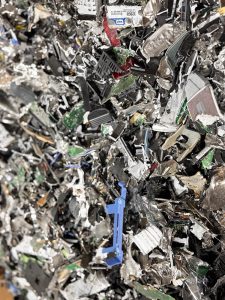 Securis builds its ITAD process on strict security controls:
- On-site shredding of HDDs and SSDs
- Detailed chain of custody
- NIST 800-88 compliance
- NAID AAA certification
- Photo documentation
- Audit-ready certificates of destruction
Accurate Inventory That Removes Uncertainty
Securis uses AI-powered asset tracking that scans and catalogs device labels. Reports achieve over 99 percent accuracy, eliminating guesswork and enhancing audit readiness.
Sustainable Practices That Support ESG Commitments
Securis adheres to R2v3 certified recycling standards and maintains transparent downstream processes, supporting ESG reporting and sustainability goals.
Speed That Accelerates Compliance and Reduces Risk
Securis delivers inventory reports and certificates of destruction within an average of three business days, helping healthcare teams reconcile records quickly and stay audit-ready.
Value Recovery That Supports Technology Budgets
The Proven Secure Value Recovery program offers secure resale, transparent pricing, clean logistics, and a 99.3 percent positive feedback rating across more than 120,000 items sold.
Competitive Contrast: Understanding the Difference
To help IT Leadership evaluate their current posture, compare your current vendor against the Securis standard:
| Feature | Generic Recycler / Competitor | Securis | Why It Matters |
| Data Destruction Standard | Unverified destruction process with no proof of compliance | NIST 800-88 Compliant | ensures data is unrecoverable by any means. |
| Certifications | ISO only (often just process) | NAID AAA + R2v3 | Third-party verification of security and environmental safety. |
| Reporting Speed | 30–60 Days | 3 Business Days | Reduces liability window; allows faster audit reconciliation. |
| Chain of Custody | Loose / Pallet-level | Item-level Tracking | Proof of location and status for every specific device. |
| Value Recovery | Scrap metal value only | Component & Device Remarketing | Maximizes financial return on IT investments. |
Conclusion
Healthcare IT asset disposition has become a critical control for protecting patient data and supporting compliance. Securis provides a secure, accurate, sustainable, and fast ITAD program that strengthens audit readiness and reduces operational risk.
