Law Enforcement Body Cameras and the Need for Secure Data Destruction
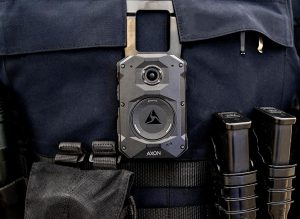 Body-worn cameras reshaped modern policing. They brought greater transparency to critical incidents, protected officers against unfounded claims, and strengthened public trust at a time when accountability matters more than ever. As these programs mature, agencies are now facing a quieter but equally important responsibility: law enforcement body camera data destruction.
When a body camera is taken out of service, the work is not over. The device may no longer be recording, but the data it contains still exists. Video, audio, timestamps, and metadata tied to arrests, investigations, and internal reviews do not simply disappear because a camera was retired or upgraded.
A retired body camera is not just outdated hardware. It is a container of evidence. It may still hold footage tied to arrests, internal reviews, civil claims, or public records requests. If that data escapes agency control, the consequences extend far beyond IT.
Most agencies are disciplined about body camera use while devices are active. Policies are written. Evidence systems are audited. Chain of custody is enforced. The risk increases at the end of the lifecycle, when older cameras are boxed up, stored, or handed off without the same level of oversight. This transition period is where assumptions replace verification and where defensibility can quietly erode.
Secure destruction is not an administrative task. It is the final act of evidence handling. Agencies that approach it with the same rigor as collection and retention protect themselves. Agencies that do not leave gaps that only become visible after something goes wrong.
Body Cameras Are Evidence Systems, Not Just Equipment
 From a distance, a body camera looks like a tool. Up close, it is an evidence system carried on an officer’s chest. Every recording includes more than video and audio. Time stamps, officer identifiers, device metadata, and contextual markers are all captured automatically.
That data becomes evidence the moment it is recorded. Evidence carries obligations. It must be protected, accounted for, and handled in a way that withstands scrutiny.
During active use, agencies are disciplined about control. Devices are assigned, docked, uploaded, and managed through formal systems. The risk increases when cameras reach the end of their service life. Upgrades happen. Models change. Storage fills up. A box of old cameras appears in a storage room waiting for a decision.
That is where problems begin.
End-of-life is not a technical phase. It is a governance phase. Agencies that treat retired cameras like surplus electronics expose themselves to unnecessary risk.
The Reality of Body Camera Technology in the Field
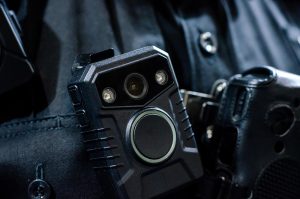 Modern law enforcement video programs are not limited to body-worn cameras. Patrol vehicles carry dash and in-car systems. Specialized units use auxiliary recording devices. Mobile interview kits and temporary capture devices appear in investigations.
What these systems share is local storage. Inside nearly every device is flash memory or solid-state media designed for reliability, not transparency. Data is written in ways that optimize performance, not easy deletion.
Even when footage is uploaded to an evidence management platform, copies often remain on the device. That residual data is invisible to the naked eye, but it is still there.
Assuming a device is empty because it was uploaded is one of the most common and dangerous misconceptions in law enforcement IT.
Vendors Do Not Eliminate Responsibility
Agencies rely on trusted vendors like Axon, Motorola Solutions, Panasonic, and WatchGuard to deliver reliable capture platforms. These systems work well, but they do not remove agency accountability.
No vendor contract transfers responsibility for what happens when a device is retired. Courts, auditors, and the public do not ask who manufactured the camera. They ask who controlled the evidence.
Vendor ecosystems end. Agency responsibility does not.
Federal Guidance Points to Defensibility
 The Department of Justice Body-Worn Camera Toolkit emphasizes accountability, evidence integrity, and documented procedures. Those principles apply across the entire lifecycle, including destruction.
CJIS guidance reinforces similar expectations. Sensitive law enforcement data must be protected, tracked, and handled in a way that can be proven after the fact.
The common thread is defensibility. Agencies must be able to show what happened, when it happened, and why it was done correctly.
That standard does not end when a device stops recording.
When Destruction Goes Wrong
Improper destruction rarely fails quietly. Retired cameras have resurfaced through surplus resale channels, improper recycling, and unsecured storage. In some cases, data was recovered. In others, agencies could not prove it was destroyed.
The damage is not just technical. It is operational and reputational. Public confidence erodes quickly when sensitive footage appears outside agency control. Legal exposure increases when evidence handling is questioned.
None of these outcomes stem from advanced cyber threats. They come from ordinary breakdowns at the end of the lifecycle.
Why Wiping Is Not Enough
Software-based wiping feels responsible. It is also often insufficient.
Body cameras rely heavily on flash memory. Flash storage uses wear leveling to spread data across memory blocks. Some areas are inaccessible to standard erasure tools. Others retain remnants even after multiple overwrite passes.
NIST 800-88 acknowledges this limitation clearly. For flash-based media containing sensitive data, physical destruction is often the only method that reliably renders data unrecoverable.
For law enforcement, where evidence sensitivity is high and scrutiny is constant, “probably erased” is not defensible.
What Secure Body Camera Destruction Actually Requires
 Proper destruction is deliberate, controlled, and component-specific.
The first step is identifying the data-bearing media. In body cameras, this is typically embedded flash memory. That memory must be physically removed and destroyed using a disintegrator or micro-shredder. This process reduces the media to particle sizes that make reconstruction impossible.
The camera housing and non-data-bearing components follow a different path. Once the flash memory is removed, the remaining unit can be processed through a one-inch shredder. This renders the device unusable while allowing responsible material recovery.
Battery handling is non-negotiable. Lithium-ion batteries must be removed before shredding. They cannot be destroyed mechanically due to fire and environmental risks. Batteries must be sent through approved recycling channels designed for hazardous materials.
This is not just best practice. It is the difference between controlled destruction and creating new hazards.
Most importantly, every step must be documented. Chain of custody does not end at retirement. It extends through destruction.
What Agencies Should Demand From a Destruction Partner
 Law enforcement agencies should expect more than a pickup and a certificate.
A qualified partner should demonstrate NAID AAA certification for data destruction and R2v3 certification for responsible electronics recycling. Destruction methods should align with NIST 800-88 guidance.
Documentation matters. Chain of custody should be continuous. Certificates of Destruction should be tied to serial numbers, not batch totals. Generic paperwork does not hold up under scrutiny.
A destruction partner should reduce agency risk, not introduce ambiguity.
How Securis Supports Law Enforcement Agencies
Securis approaches body camera destruction as evidence handling, not electronics disposal.
Devices are transported through secure logistics. Data-bearing components are identified and removed. Flash memory is micro-shredded. Batteries are separated and recycled safely. Remaining hardware is destroyed and processed responsibly.
Every step is documented. Agencies receive audit-ready records that support compliance, litigation defense, and public accountability.
With nationwide coverage and processes designed for regulated environments, Securis helps agencies close the loop on body camera programs with confidence.
Speak With a Data Destruction Specialist
Body cameras protect officers and communities. Mishandled retirement puts both at risk.
If your agency is replacing, upgrading, or retiring body-worn or in-vehicle camera systems, speak with a data destruction specialist who understands evidence, compliance, and defensibility.
Request a quote or discuss a secure destruction plan built for law enforcement realities.
